Guides · 8 min read
SAS vs SATA vs NVMe: choosing server SSDs and SAS drives
Interfaces, form factors, endurance classes and backplanes: how to find the right drive for your server.
Stock items leave our warehouse in Germany within 24 hours
SAS hard drives offer large capacity at a low cost per terabyte and are designed for continuous operation in servers. Here you will find 3.5-inch models at 7200 rpm with high capacities for backup, archive and NAS, and 2.5-inch drives at 10,000 or 15,000 rpm for databases and virtualization on older systems. A SAS drive needs a SAS controller or HBA and will not work on plain SATA ports, whereas SATA drives run fine on SAS controllers. Watch the sector format: drives from storage arrays such as NetApp or EMC are often formatted with 520-byte sectors and cannot be used in normal servers straight away. Our drives are formatted to 512e or 4Kn, checked and documented with their SMART values. Warranty is 12 to 36 months, and drive caddies for Dell and HPE are available on request.
No products found
Adjust the filters or ask us directly. We can source most hardware within a few days.
With a SAS hard drive, spindle speed largely decides what it's good for. Fast 2.5-inch drives at 10,000 rpm deliver more operations per second; slower 3.5-inch drives at 7,200 rpm offer many times the capacity. You can't have both in one drive. Which class suits your server depends on whether you need capacity for backup and archive or are topping up an existing RAID array.
| Class | Form factor | Capacities | Random IOPS (rule of thumb) | Use | In our range |
|---|---|---|---|---|---|
| 15K SAS | 2.5-inch | 300 to 900 GB | about 200 | only as replacements in old arrays | – |
| 10K SAS | 2.5-inch | 600 GB to 2.4 TB | about 140 | existing systems, mixed workloads | Seagate Exos 10E2400 1.2 TB, Dell 2.4 TB 10K |
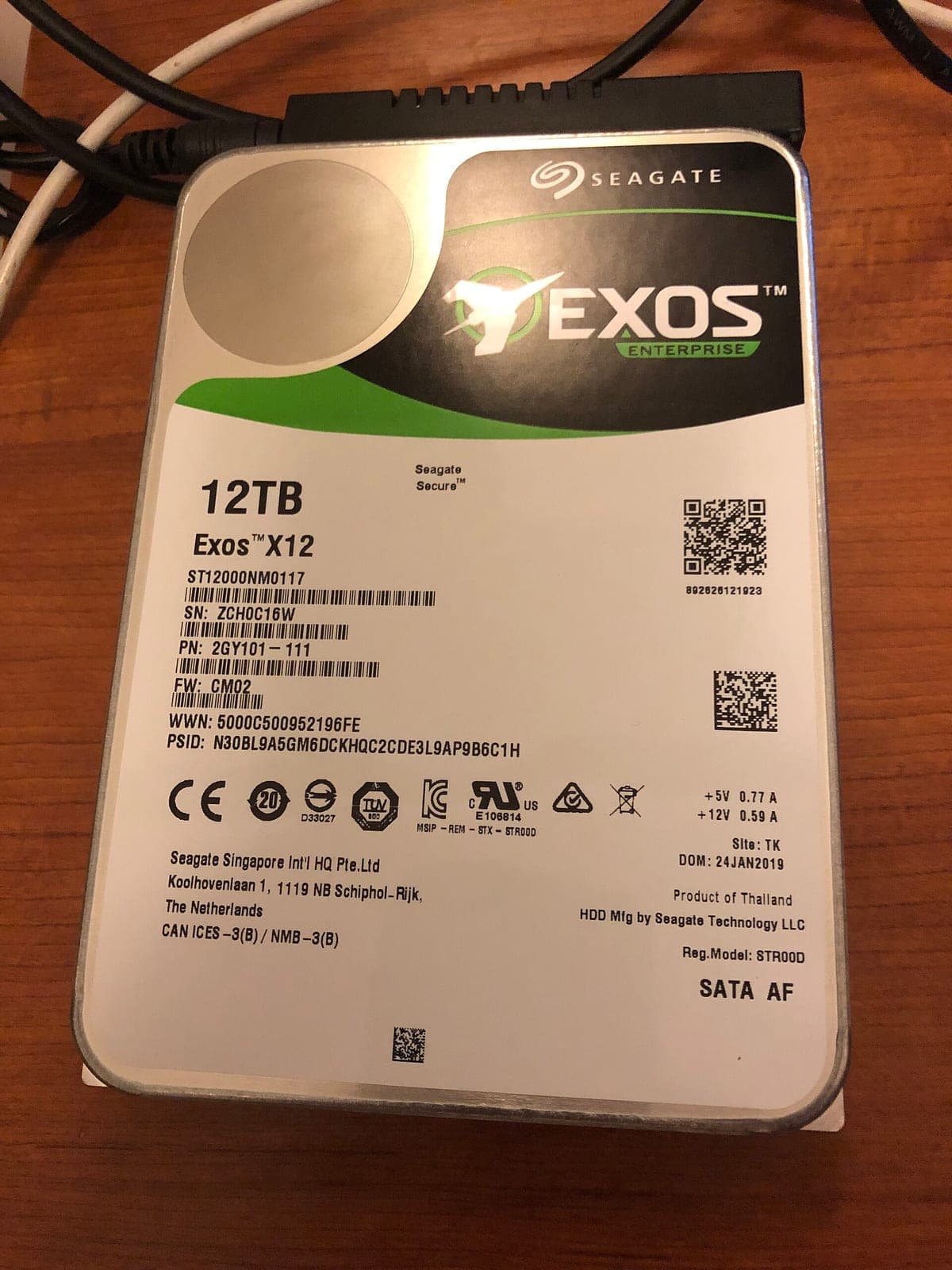
| 7.2K nearline SAS | 3.5-inch | 2 to over 20 TB | about 80 | backup, archive, NAS, video | Seagate Exos X12 12 TB |
Answers to the questions we hear most often before a first order.
Question not listed?
10K SAS as a replacement: for an existing array, choose the same spindle speed and at least the same capacity. A larger drive works, but the controller only uses the original size. Don't mix speeds within an array – it always runs at the pace of its slowest drive. The Dell 2.4 TB 10K already comes in the right caddy for PowerEdge 14G and 15G.
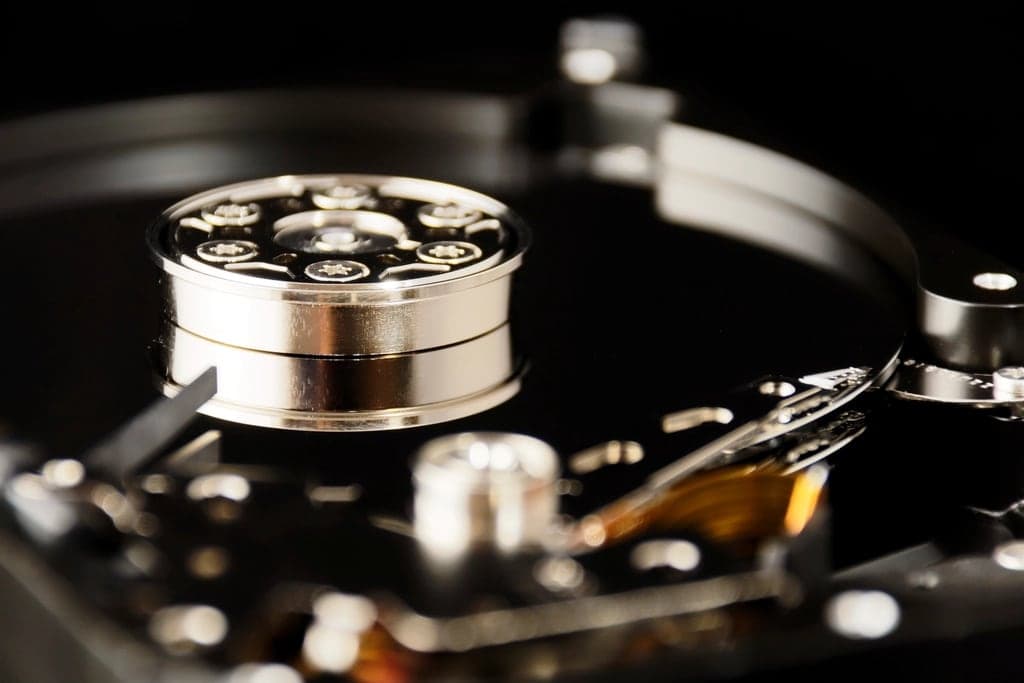
The faster the platters spin, the smaller and lighter they have to be: centrifugal force, vibration, heat and power draw all rise with speed. That's why 10K and 15K drives use the 2.5-inch format with a few small platters. Capacity drives at 7,200 rpm stack many large platters instead; modern models such as the Exos X12 are filled with helium, which cuts friction and heat.
Since SSDs took over the role of fast drives, 10K and 15K disks have barely been developed further, and 10K tops out at 2.4 TB. For new systems that need performance, server SSDs are the better choice: a single SATA SSD already manages many times the IOPS of an entire 10K array.
Nearline SAS (NL-SAS) combines capacity-drive mechanics with the SAS interface. Compared with the SATA version of the same drive family, it adds two ports for redundant paths, more robust error handling and trouble-free operation behind SAS expanders – in JBOD enclosures or storage servers such as the Supermicro SSG-6049P with 36 bays. SATA drives cost a little less and are fine for simple NAS boxes. Watch the workload rating: enterprise models such as the Exos X12 are rated for 550 TB a year, typical NAS and desktop drives for considerably less.
Our guide SAS vs SATA vs NVMe compares the interfaces in depth. To run SAS drives you need a SAS-capable RAID controller or HBA.
When a drive fails, the controller has to rewrite its entire contents. At 12 TB and an average of 200 MB/s that takes about 17 hours on paper, and often one to two days under production load. During that time a RAID 5 array has no protection against a second failure. For large nearline drives, RAID 6 or RAID 10 is therefore the norm; see our guide RAID 10, RAID 5 or RAID 6.
No. SAS drives need a SAS controller or HBA, for example a Broadcom 9300-8i or Dell HBA330. SATA drives, on the other hand, also work on SAS controllers.
Every drive is checked before it ships. Drives with reallocated or pending sectors are rejected. Power-on hours and SMART values are available on request.
Yes, in servers with hot-swap bays. Caddies are vendor-specific: Dell caddies do not fit HPE servers and vice versa. We can supply matching caddies on request.
Guides · 8 min read
Interfaces, form factors, endurance classes and backplanes: how to find the right drive for your server.