Refurbished meaning: what a refurbished server really is
Refurbished means more than used. What the term covers, how proper refurbishing works and how to spot a reputable seller.
- Published
- Reading time
- 7 min
- Topic
- Buying & assessing
Contents9 sections
- What does refurbished mean for servers?
- Refurbished, used, B-stock: the terms compared
- What refurbished does not mean
- How proper refurbishing works
- Grading: what A, B and C mean
- Statutory rights and warranty: the difference
- Is refurbished more sustainable?
- How to spot a reputable seller
- Frequently asked questions
Key points
- Refurbished means a used device has been tested, cleaned, updated, repaired where needed and is sold with a warranty.
- Neither “refurbished” nor its German equivalent “generalüberholt” is protected. What counts are exact details on configuration and condition and clear warranty terms.
- Grading (A, B, C) describes appearance, not function – and every seller defines it differently.
- Statutory liability for defects and a voluntary warranty are two different things.
The meaning of refurbished is straightforward: renovated or restored. For servers, the term stands for used enterprise hardware that has been taken out of a data centre, tested, cleaned, brought up to current firmware and resold with a warranty. No law defines it – which is why it pays to look at the process behind the label.
What does refurbished mean for servers?
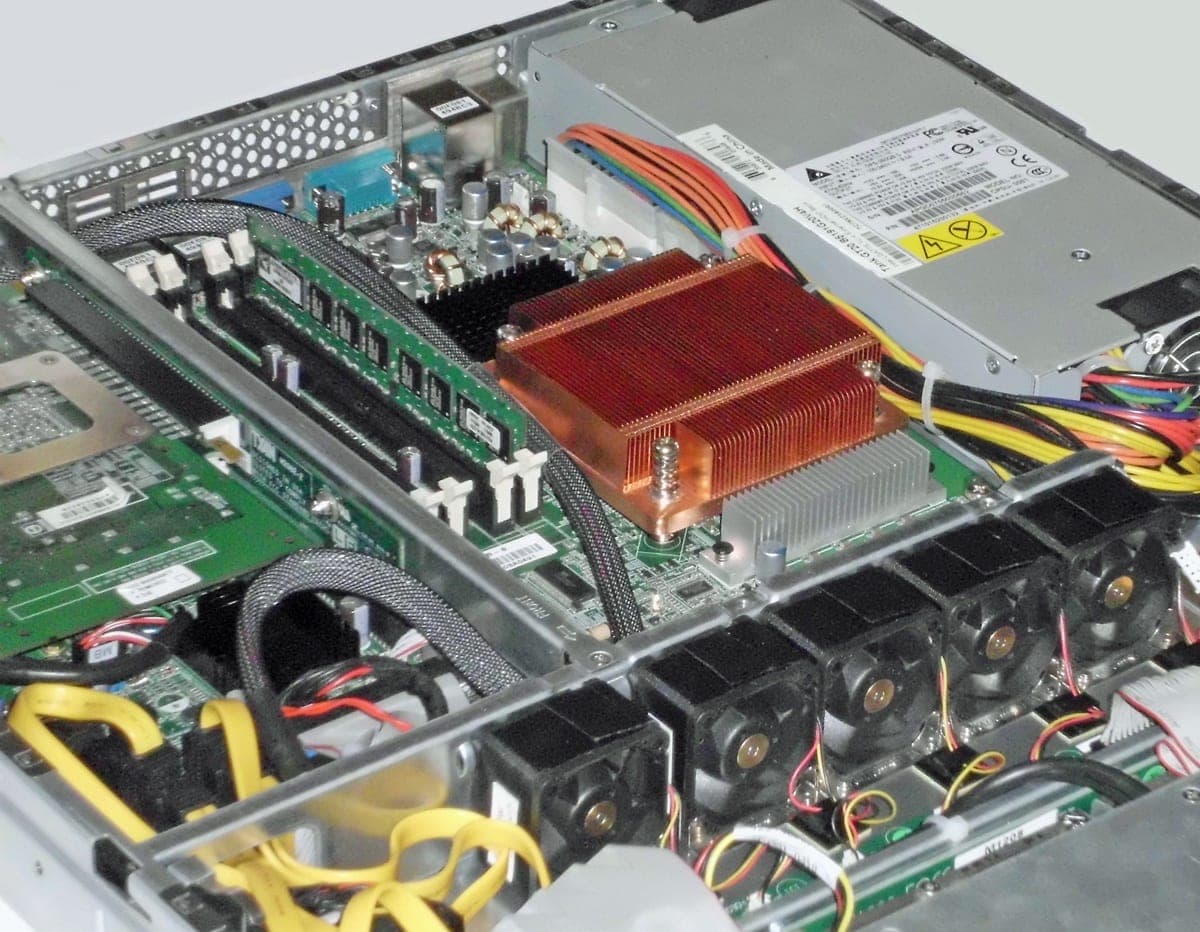
A refurbished server is not new, but it is not sold as seen either. The seller stands behind it working fully: every component has been tested, wear parts replaced where needed, old data provably erased. Most refurbished servers come from lease returns and data-centre refreshes. Companies often replace hardware after three to five years – because the lease ends, the asset is written off or vendor support runs out, rarely because something is broken. Enterprise servers are built for continuous operation and usually have many years left in them.
Refurbished, used, B-stock: the terms compared
| Term | Previously in service? | Tested and refurbished? | Typical cover |
|---|---|---|---|
| Refurbished | yes | yes, with test report | seller warranty on top of statutory rights |
| Used | yes | not necessarily | statutory rights, often excluded between businesses |
| B-stock / open box | barely (returns, display units) | usually a visual check | depends on the seller |
| New without original packaging | no | not needed | depends on the seller |
New without original packaging, also called new old stock, means unused parts from surplus stock – spare drives or power supplies that never ran in a server. B-stock is more common with consumer devices: returns, display units or items with damaged packaging or scratches. Lease returns are the source of many refurbished servers, but they are not refurbished yet. Only testing and reconditioning turn them into refurbished stock.
What refurbished does not mean
Refurbished does not mean “as new with a manufacturer warranty”. On data-centre returns the original manufacturer warranty has usually expired, and the seller’s warranty takes its place. Some vendors also tie firmware downloads or support to an active service contract, so ask whether the server ships with current firmware already installed. Parts differ too: a reputable seller tells you whether replacements are original or equivalent. For memory, drives and power supplies it is worth asking for vendor part numbers, as some servers flag third-party components as uncertified.
How proper refurbishing works
Good refurbishing is a fixed, documented process. For servers it typically covers these steps:
Intake and logging
Each unit is logged by serial number or service tag, and its configuration recorded: CPUs, memory modules, controller, power supplies, drives. That keeps every part traceable.Certified data erasure
Every drive is wiped using a recognised method, with the result recorded per serial number. Overwriting is not enough for SSDs; they need the drive’s own secure erase or sanitize function. Faulty drives are physically destroyed.Visual inspection and cleaning
Chassis, connectors, backplane and CPU sockets are checked for damage; bent socket pins are a typical shipping fault. Dust is blown out of heatsinks and fans with ESD-safe compressed air, and swapped CPUs get fresh thermal paste.Replacing wear parts
Fans with bearing noise, power supplies logging errors, aged RAID cache batteries or capacitor modules – on a PERC H730P, for example – and the CMOS battery are replaced.Updating firmware and BIOS
BIOS, management controller, RAID controller, network cards and drives are brought to a current, consistent level. The management controller is reset to factory defaults, removing the previous owner’s accounts and settings.Testing under load
CPU, memory and drives are tested under load. The event log, corrected memory errors and temperatures are then reviewed. Any part that stands out is replaced and the test repeated.Test report and packing
Results and serial numbers are documented, and the server is packed shock-proof and antistatic. The report records the condition in which the unit left.
Every system we sell is cleaned, updated to current firmware, checked and tested before it ships.
Grading: what A, B and C mean
Many sellers grade cosmetic condition. There is no binding standard; a typical scale looks like this:
| Grade | Cosmetic condition | Function |
|---|---|---|
| A | barely any signs of use, at most fine scratches | fully working |
| B | visible scratches, small dents, sticker residue | fully working |
| C | clear scratches and dents, discoloured plastics | fully working |
For a server that disappears into a rack, looks hardly matter. What matters more is that nothing is missing: front bezel, blanks, drive carriers and rails should be listed in the description. If in doubt, ask for photos of the actual unit.
Statutory rights and warranty: the difference
Statutory liability for defects (Gewährleistung in German law) means the seller is responsible for the goods being free of defects at handover. For consumers the period is generally two years; for used goods it can be shortened to one year under certain conditions. Between businesses, liability for used goods can largely be limited or excluded.
A warranty is a voluntary promise by the seller or manufacturer. Term, scope, shipping costs and the replacement process are set out in its terms. It applies on top of statutory rights and does not replace them. Depending on the item we give up to 36 months’ warranty; see our warranty page for the terms.
Is refurbished more sustainable?
With servers, too, a considerable share of the environmental impact comes from manufacturing: raw materials, chip fabrication, circuit boards, transport. Keeping an existing machine in use avoids that effort for a new one and keeps electronics out of recycling for longer. In operation, a newer generation is often more efficient per unit of computing power. Whether reuse comes out ahead therefore depends on utilisation, service life and the electricity mix. For typical workloads with moderate load, there is a lot in favour of refurbished.
The loop works the other way too: we buy your company’s retired servers and components through our buy-back service. You erase the drives yourself beforehand.
How to spot a reputable seller
- Full legal notice with address and VAT number, contacts you can actually reach
- A clear condition label: new, like new, used or refurbished
- Exact configuration: CPU model, memory modules with size and speed, controller, PSUs, rails, remote management licence
- A right of withdrawal for consumers and reachable support if something goes wrong
- Clear warranty terms with a stated term rather than a vague “with warranty”
- An invoice showing VAT
Be wary of listings marked “untested”, “for parts” or “sold as seen”, of manufacturer stock photos without configuration details, and of prices far below the going rate.
How to choose the right model next is covered in the guide Buying used servers. What to check on the management controller of a used machine is explained in Remote management with iDRAC, iLO and IPMI. Businesses can also buy from us on invoice – see business customers.
Frequently asked questions
Short answers to the questions we hear most often on this topic.
What does refurbished mean?
Refurbished means restored or reconditioned. It describes a used device that has been tested, cleaned, updated and repaired where needed, and is sold with a warranty.
Is refurbished the same as used?
No. Used only means a device has been in service. Refurbished also means a seller has reconditioned it to a defined process and backs it with a warranty.
What is the difference between refurbished and B-stock?
B-stock is usually new or barely used goods with packaging or cosmetic flaws, such as returns or display units. Refurbished hardware was in regular service and has since been technically reconditioned.
Are refurbished servers reliable?
Enterprise servers are built for years of continuous operation. After careful checks and replacement of wear parts such as fans and batteries, they usually run as reliably as before. A warranty covers the remaining risk.
What warranty do refurbished servers come with?
Each seller sets its own. Ours is up to 36 months depending on the item. Statutory rights apply regardless, although they can be restricted for used goods and between businesses.
Keep reading
Buying used servers: what really matters
Generation, form factor, CPU, memory, controller, remote management and warranty: the points that decide whether a used server fits your workload.
Read more
AI servers for local LLMs: Tesla P40, V100, L4 or A100?
How much GPU memory a language model needs, which data-centre GPU suits which budget and what matters for cooling, power and software.
Read more
RAID 10, RAID 5 or RAID 6? RAID levels compared
From RAID 0 to RAID 60: what each level gives you in capacity, safety and write speed, why large hard drives need RAID 6 and when an HBA is the better fit.
Read more